1984 Sarajevo Winter Olympic Games
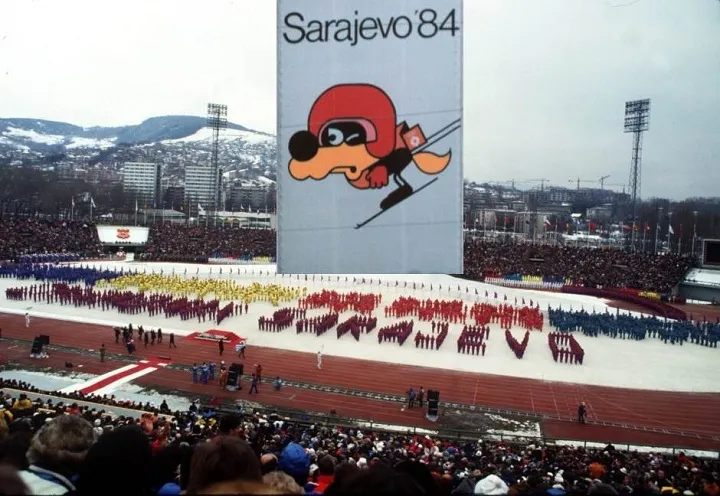
In February 1984, Sarajevo welcomed the world for the XIV Olympic Winter Games. For a few unforgettable weeks, the city and its surrounding mountains became the center of international winter sport, while the Games reshaped Sarajevo in ways that can still be seen today.
Why Sarajevo Was Chosen
Sarajevo sits in a valley around 500 meters above sea level, surrounded by Bjelašnica, Igman, Jahorina, and Trebević. These mountains offered the varied terrain needed for alpine skiing, ski jumping, cross-country skiing, biathlon, and bobsleigh, all within easy reach of the city.
The city’s central position in Yugoslavia and its multicultural character also made it a natural representative of the country. Sarajevo won the right to host the Games ahead of Sapporo in Japan and Gothenburg in Sweden, becoming the first city in a socialist state and the first in the Balkans to host the Winter Olympics.
The event brought together 1,272 athletes from 49 countries, competing in 39 events across six sports. The opening ceremony took place at Koševo Stadium on February 8, 1984, beginning an Olympic celebration remembered for its warm welcome and excellent organization.
How the Games Transformed Sarajevo
Preparing for the Olympics accelerated Sarajevo’s development. New roads connected the city with its mountain venues, hotels and sporting facilities were built or improved, and the airport was modernized. The Olympic villages of Dobrinja and Mojmilo also expanded the city and later became residential neighborhoods.
For Sarajevo, the Games were more than a sporting event. They introduced the city to a global audience and created a shared sense of pride across Yugoslavia.
Sarajevo’s Olympic Mountains
Each mountain played a distinct role during the Games, and each offers visitors a different glimpse of the Olympic story today.
Bjelašnica and Jahorina
Bjelašnica hosted the men’s alpine skiing events, while Jahorina hosted the women’s competitions. Both remain popular ski destinations, with modern lifts, accommodation, and slopes used by locals and international visitors throughout winter.
Igman
Igman hosted ski jumping, cross-country skiing, and biathlon. Its Olympic ski jumps still rise above the landscape as striking reminders of 1984. Visitors can also enjoy gentle walks, forest scenery, and recreational winter activities around the mountain.
Trebević
Trebević was home to the Olympic bobsleigh and luge track. The track was damaged during the 1992-1995 siege of Sarajevo, but its concrete curves remain one of the city’s most recognizable landmarks. Now covered in colorful street art, it is popular with walkers, photographers, cyclists, and travelers exploring the mountain.
The Sarajevo cable car makes Trebević especially easy to visit, carrying passengers from near the Old Town into the mountain scenery above the city.
Olympic Venues in the City
Sarajevo’s indoor events took place primarily at Skenderija and Zetra Olympic Hall. Skenderija, opened before the Games, hosted ice hockey and figure skating events. Zetra, built as a major Olympic venue, hosted ice hockey, figure skating, and the closing ceremony.
Zetra was badly damaged during the siege but later rebuilt. Today it bears the name of Juan Antonio Samaranch, the former president of the International Olympic Committee, and continues to host sporting and cultural events.
Koševo Stadium, the setting for the opening ceremony, also remains active as Sarajevo’s principal football and athletics stadium.
Jure Franko and an Unforgettable Silver Medal
The Soviet Union finished the Games with the highest total number of medals, followed by East Germany and Finland. Yet the medal Sarajevo remembers most fondly belongs to Yugoslav alpine skier Jure Franko.
Franko won silver in the men’s giant slalom, earning Yugoslavia its first medal in the history of the Winter Olympics. Sarajevo celebrated with the playful chant, “Volimo Jureka više od bureka,” meaning, “We love Jurek more than burek.” In a city famous for its food, there could hardly have been a warmer compliment.
Vučko, Sarajevo’s Beloved Mascot
Vučko, the smiling wolf created by Slovenian artist Jože Trobec, became the friendly face of the 1984 Games. His cheerful expression helped transform the wolf from a figure often associated with fear into one of warmth and hospitality.
Decades later, Vučko remains one of Sarajevo’s best-loved symbols. His image appears on murals, postcards, clothing, and souvenirs throughout the city, preserving the optimism and humor associated with the Games.
The Olympic Museum
The Olympic Museum opened during the Games in a villa designed by Czech architect Karel Pařík. The building was destroyed during the siege and later carefully restored.
Today, its exhibitions preserve photographs, sporting equipment, medals, documents, and personal stories from 1984. It is an ideal starting point for anyone who wants to understand both the scale of the Games and their emotional importance to Sarajevo.
Exploring Sarajevo’s Olympic Legacy
Sarajevo’s Olympic history is not confined to a museum. It lives across the city, in its neighborhoods and sports halls, and on the mountains that still frame the skyline.
A visit can include the Olympic Museum, Koševo Stadium, Zetra, the former Olympic village, Trebević’s bobsleigh track, and the mountain venues beyond the city. Together, these places tell a story of ambition, celebration, destruction, recovery, and enduring local pride.
To discover the people and stories behind these landmarks, explore them with a local guide on a Sarajevo Olympic tour.